On Friday I'm running our
Learning and Teaching in the Sciences conference. I say I'm running it, but I very much hope that I'll just be facilitating it as this year we're going to attempt one of those participant led
unconference things.
Initially I'd decided to cancel this year's event as we couldn't get the speakers we wanted, then (to my surprise and delight) several people complained. So it's back by popular demand! Alan Cann commented that a traditional conference was the
last thing we needed and suggested an unconference? So that's what we're experimenting with on Friday. Here's an outline so that I can a) get my thoughts down and b) invite comments and suggestions.
Factors
There are some of the factors we need to bear in mind if this is going to work well.
Numbers
We have 20 booking so far and I don't imagine that will go up or down a great deal between now and Friday.
Room
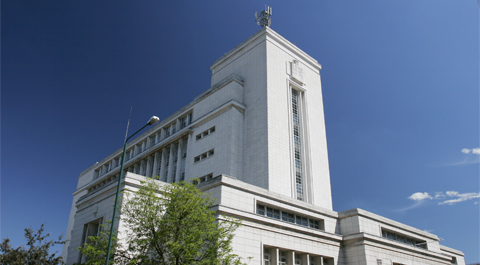
We will be in GPS18 - a reading room in the George Porter building - which will accommodate more than 30 but will probably be best set up as 4 groups of tables with 8-ish around each table.
Time
We have 3 hours available (10.30-13.30) but with lunch included in that, so will probably closer to 2 hours.
Participants
We will have a mix of people coming along - some of whom will be very comfortable with the idea of an unstructured unconference, others of whom (I expect) will find it all a bit odd. So I need to give the event some direction and shape, but without turning it back into a conference. I don't want to stick slavishly to the unconference model (of which there's not a great danger because I don't know enough about it!) but I do want to use it as far as it's useful in getting everyone involved and contributing and coming up with practical ideas.
Theme
The theme is
assessment, more specifically we have a question to focus our thoughts:
Do we over assess our students and should we assess less?
Outline
So a suggested outline is as follows (NB. timings very approximate).
Introduction (10 minutes)
Explain the proposed outline and relevant unconference elements:
- each group will have a convenor to facilitate (not lead) the discussion - they are not necessarily an expert on the chosen topic, they've just identified a challenge and want some ideas;
- each group will have a flip chart pad and pens and will need to note down (and then present back) the challenge they have identified and some suggested solutions;
- participants can choose to go to whichever group they like;
- participants can (and are encouraged to) move to a different group whenever you think they've got as much from they're current group as they can.
Pitches for session 1 (10 minutes)
This is the bit that's not very unconference-y. Get 4 pre-primed people to pitch their idea as one of the group topics. The suggestions I've had so far are as follows (not all of these people have been asked yet - some have been volunteered - but take it as a complement!).
- Using Turnitin for assessment (Jo Badge)
- 10 quick wins on assessment (Jon Scott)
- PC-based exams (Richard England)
- [and another one please - Alan? Chris? Dai?]
Each pitch is a a maximum of 2 minutes - no slides.
Just noticed none of these are problems - just things - any suggestions?
Session 1 (up to 30 minutes)
This is when people get into groups around the tables and off they go. Participants can switch group whenever they like (but not the convenor).
Feedback from session 1 (10 minutes)
Feedback from each group.
Tea and coffee (10 minutes)
Brainstorm for session 2 topics (10 minutes)
What do we want to talk about next?
Session (up to 30 minutes)
As for session 1.
Feedback from session 2 (10 minutes)
As for session 1.
Conclusion
What are we going to do next?
Lunch
Courtesy of central catering.